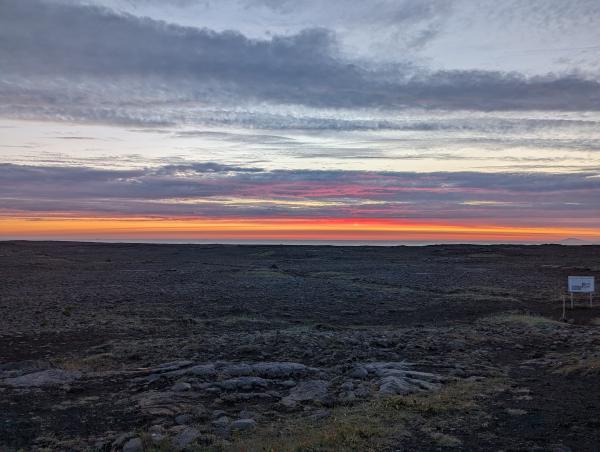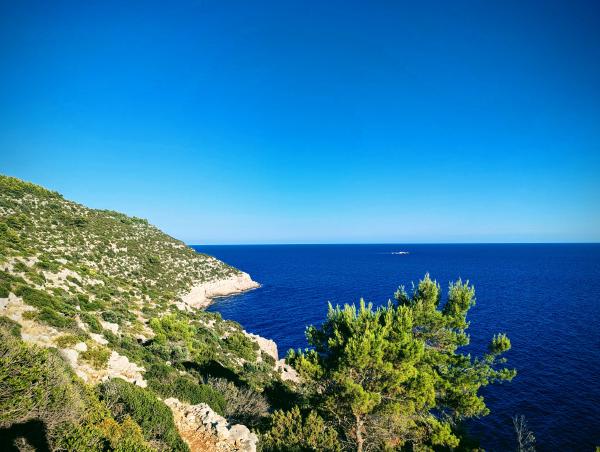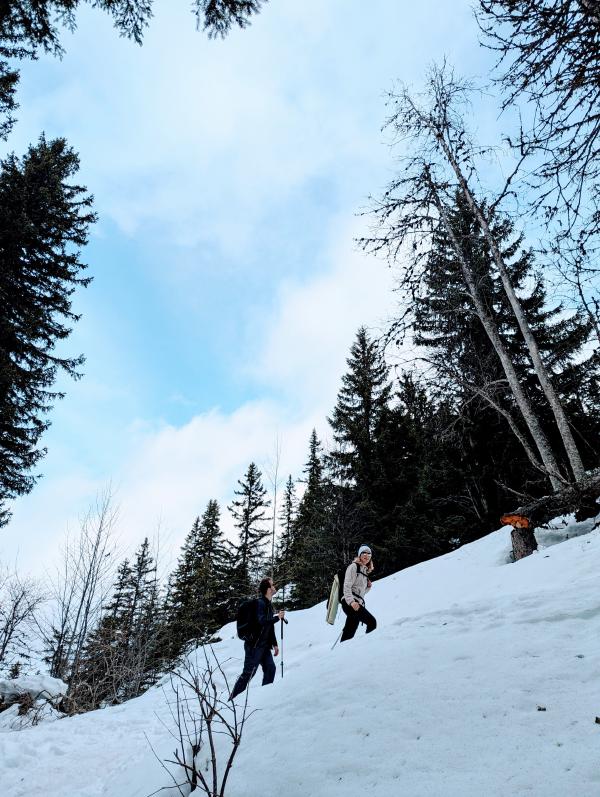

Three years after our first Icelandic road-trip, where we stayed in the south, we wanted to go back. This time the idea was to see what we had left out: the north, the eastern fjords, the Landmannalaugar highlands and above all the Westfjords, that shredded peninsula in the west where almost nobody goes.
Eleven days, a camper, and a lot of waterfalls.
Vehicle#
As the first time, we went with Kúkú Campers in Keflavík. The idea is the same: a converted vehicle, everything needed to cook and sleep, and the freedom to stop wherever we want, as long as we sleep on a campsite.
We did change vehicle category though: this time we took a van fitted with a heater. In 2023 we had the smallest van in the catalogue, with no heating, and mornings were distinctly chilly. With a heater the comfort is on another level: you can dry wet gear after a day of rain and get up without shivering. Over eleven days, and heading north into the Westfjords, it is the extra we would recommend above all others.
As a reminder, wild camping is forbidden in Iceland. Campsites are plentiful, booking is almost never necessary, and you pay on arrival at the reception.
We picked up the vehicle at the start of the trip and returned it at the airport on the last day, which makes the logistics much simpler.
Route#
Day 1: First waterfalls of the south#
Picking up the camper at Kúkú, then the obligatory supermarket stop to buy food for the trip. It is easy to forget how long that first step takes.
We then head east, with three waterfalls along the way:
- Urriðafoss, on the Þjórsá, the longest river in the country. It is not very tall but very wide, with an impressive flow.
- Gluggafoss (also called Merkjárfoss), where the water squeezes through holes in the rock, hence its nickname of “window falls”. We climbed the path running alongside the falls to see the upper cascades: well worth the few minutes of effort.
- Ægissíðufoss, a wide waterfall on the Ytri-Rangá, right next to Hella.
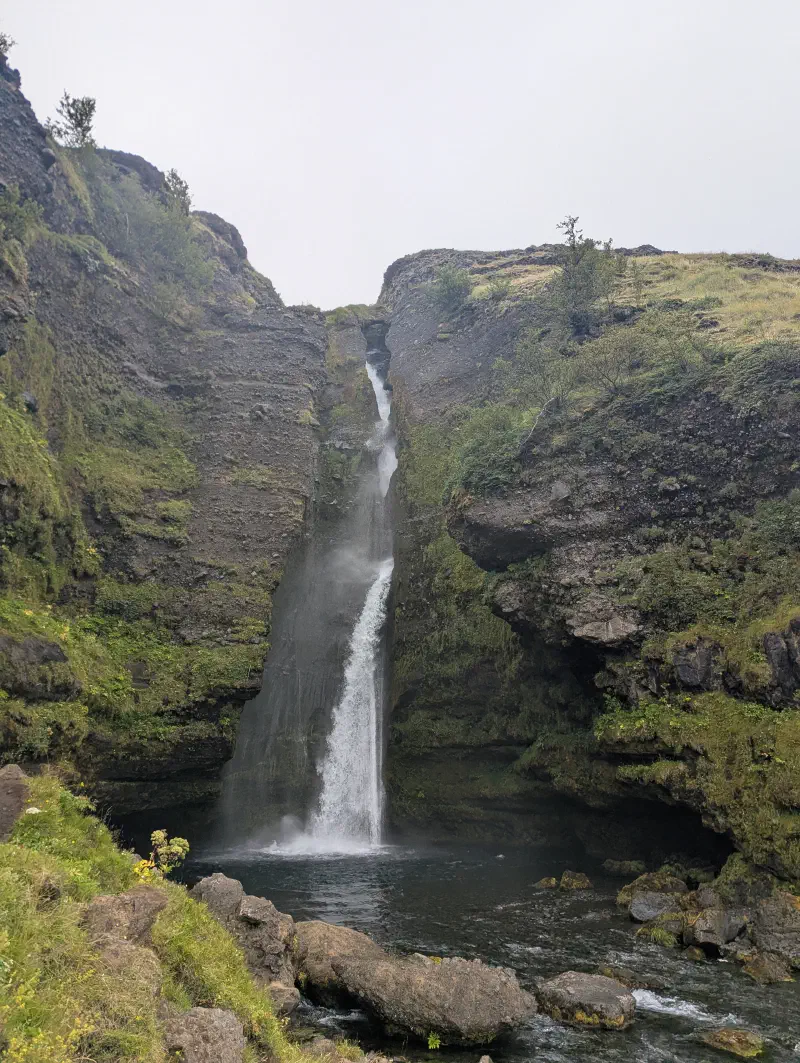
Night at the Þykkvibær campsite. Quiet, and well placed for the next day.
Day 2: Up to Landmannalaugar#
Morning meeting point in Hella to catch the highland bus to Landmannalaugar. That is the way to go when you do not have a 4x4 able to take the F-roads and cross the fords: the track is not made for a two-wheel-drive camper.
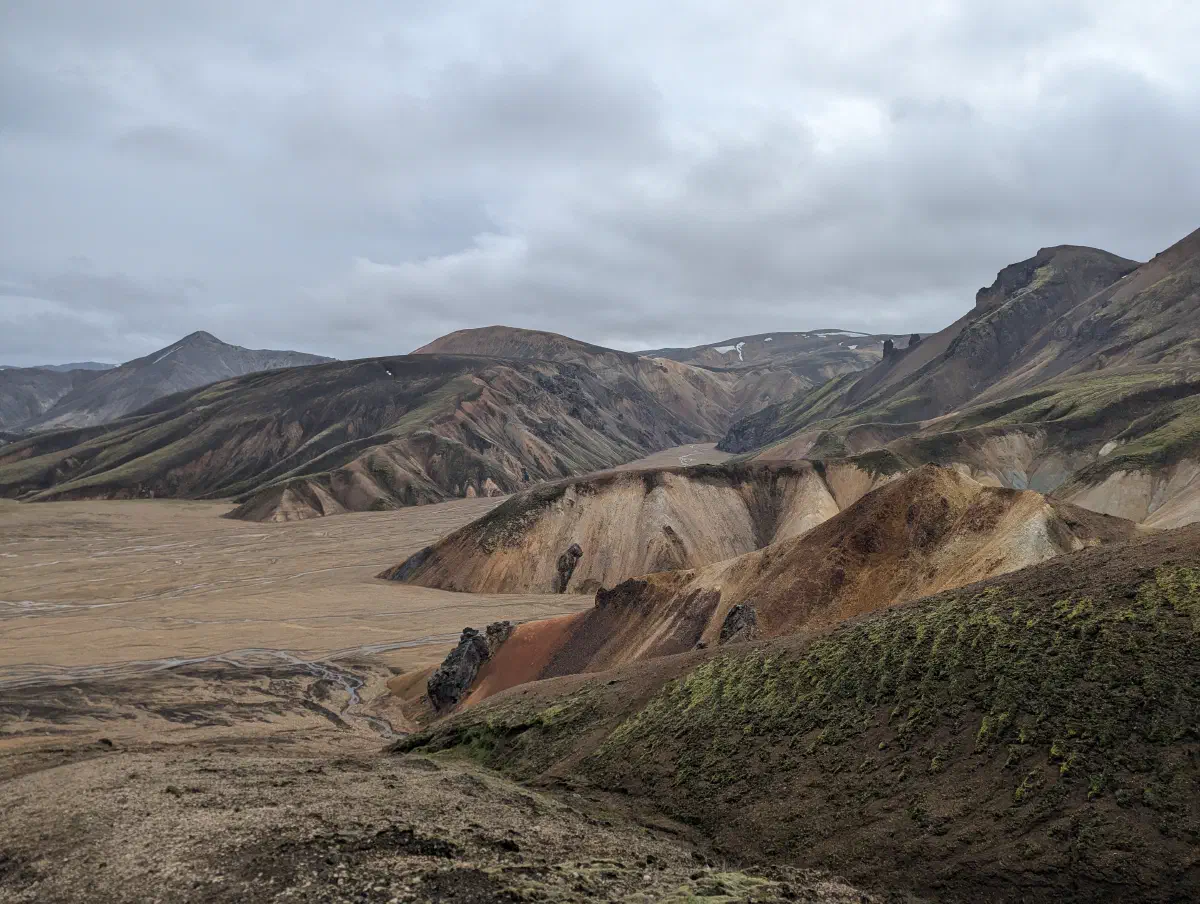
Once there, we set off straight away for the Suðurnámur ridge, then continued to the summit of Brennisteinsalda. The colours are unreal: yellow, ochre, red and green rhyolite, with sulphur fumaroles hissing right next to the path. It is probably the most beautiful landscape we have seen in Iceland.
On the way down, straight to the natural hot springs at the camp: open-air hot water in the middle of the lava after a day of walking is hard to beat.
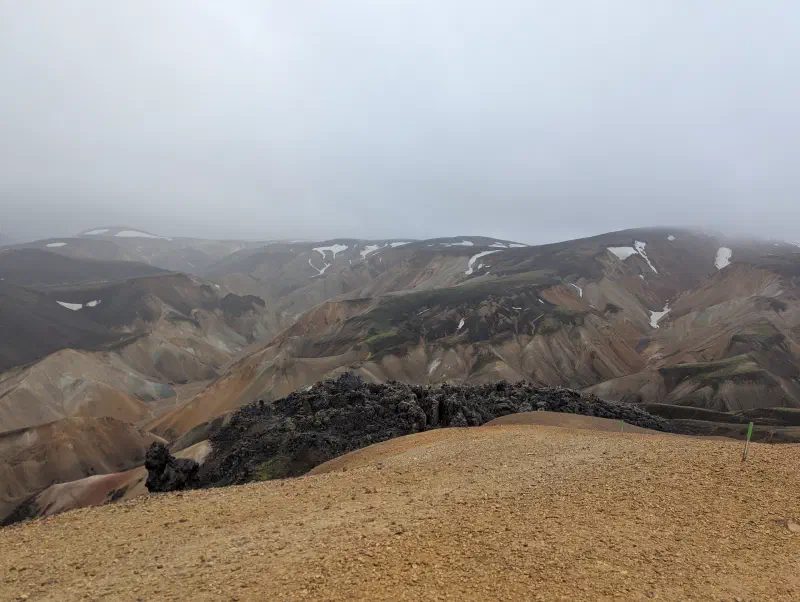
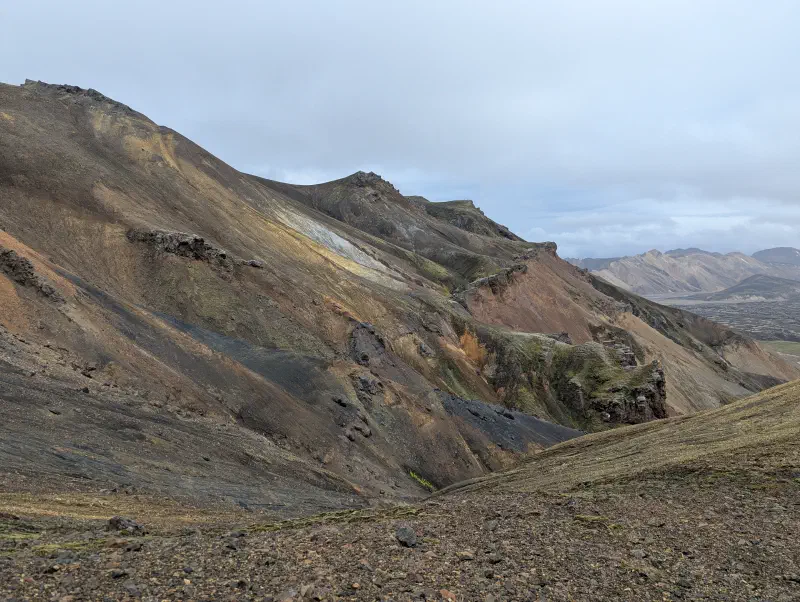
Night in the camp hut.
Day 3: Skalli and a slightly sporty way back#
Second day of hiking, with the climb up Skalli. For the return we chose not to retrace our steps and took an unmarked path, clearly shown on the maps, which joins the descent of Bláhnúkur.
A great adventure, but not to be taken lightly: the route is sometimes hard to follow, often steep, and you need to be comfortable with route-finding. The landscape more than repays the effort.

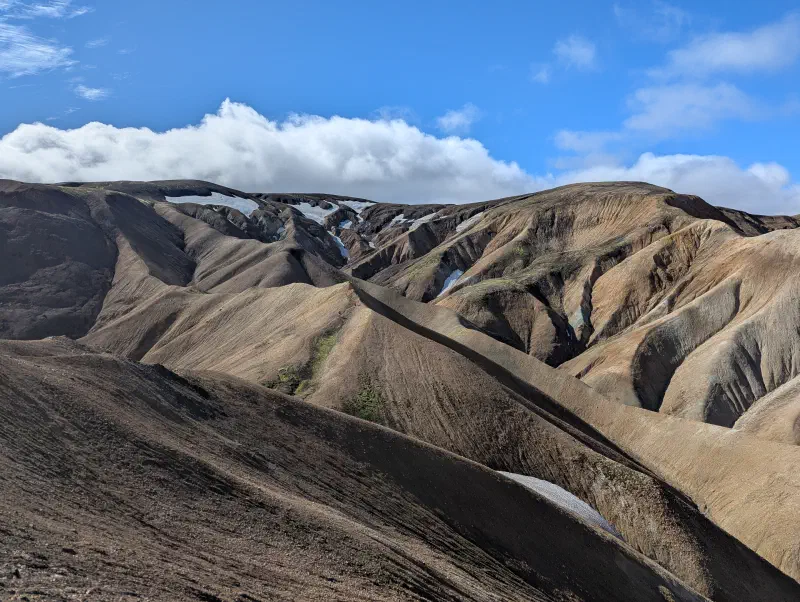
Back to the camp, then the bus down to Hella. We picked the camper up again and drove east to sleep at Skaftafell.
Day 4: The south-east coast in the rain#
A short stop at the glacier lagoon to see the icebergs again, then a lot of driving in the rain.
We made a quick stop at the Viking Café, near Stokksnes, before continuing north-east.
The highlight of the day was the stop at the Vök Baths, on lake Urriðavatn near Egilsstaðir. These are floating pools fed by a hot spring, set directly on the lake: you can go from a 40 °C pool to the lake water in a few steps. After a day of rain, the effect is immediate.
Night at the Skipalækur campsite in Fellabær.
Day 5: Seyðisfjörður, then across to Húsavík#
A big day, and probably one of the best.
We spent the morning in Seyðisfjörður. The drive down to the village is spectacular, with a stop at Gufufoss right by the road. Once there, we climbed to Búðarárfoss, just above the village, then followed the Vestdalsfossar trail: a path that runs along the river and links one waterfall after another, with the fjord in view behind you. A real favourite.
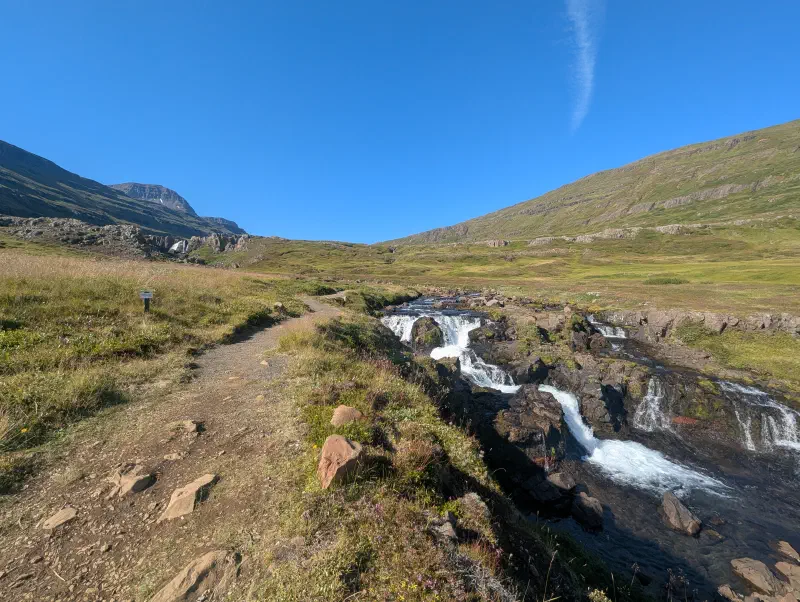
Picnic by the sea, then a long drive north. Along the way:
- Rjúkandi, a fan-shaped waterfall visible from route 1, in Jökuldalur.
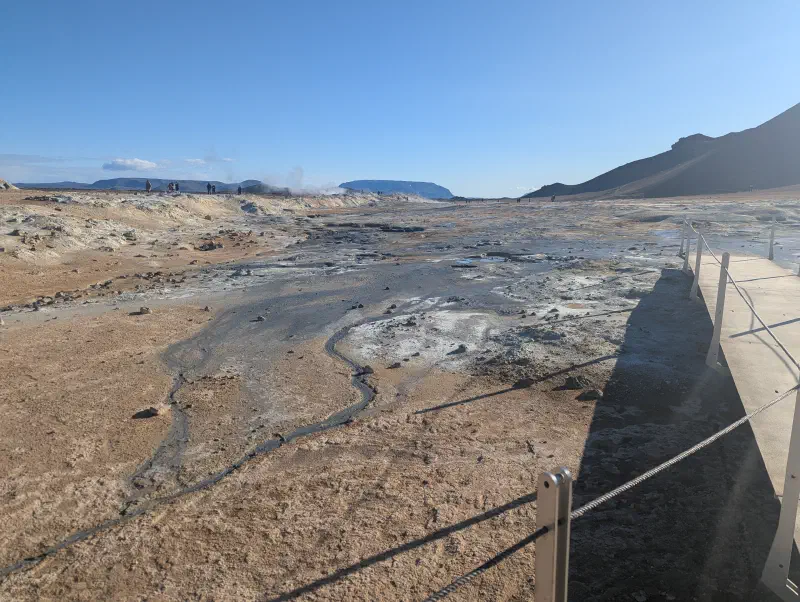
- Hverir, at the foot of Námafjall: mud pots, fumaroles, ochre ground and the smell of sulphur. We walked the trail that loops around the site, a bit steep in places, but it gives a far better overview than the car park alone.
Two warnings about Hverir: the loop trail needs a minimum of care, and above all the flies are everywhere. A head net is an investment we did not regret.
Night in Húsavík.
Day 6: Whales, a crater and beach baths#
Whale watching with North Sailing, out of Húsavík. Mixed result: one small whale briefly spotted and a seal. A little frustrating given the wait, but the company offered us a second trip, which softened the disappointment.
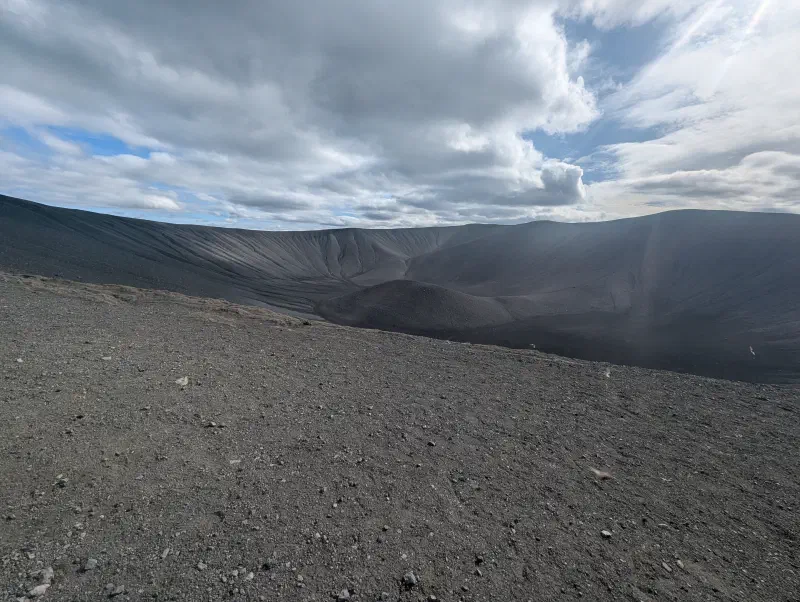
In the afternoon we walked around the Hverfjall crater, near lake Mývatn. The trail climbs onto the crater rim and loops all the way around, with a 360° view over the region. Here the flies are even worse than at Hverir: it is the most unpleasant spot of the whole trip in that respect. The shelter housing the parking payment machine is itself full of flies and larvae: pay quickly and get out.
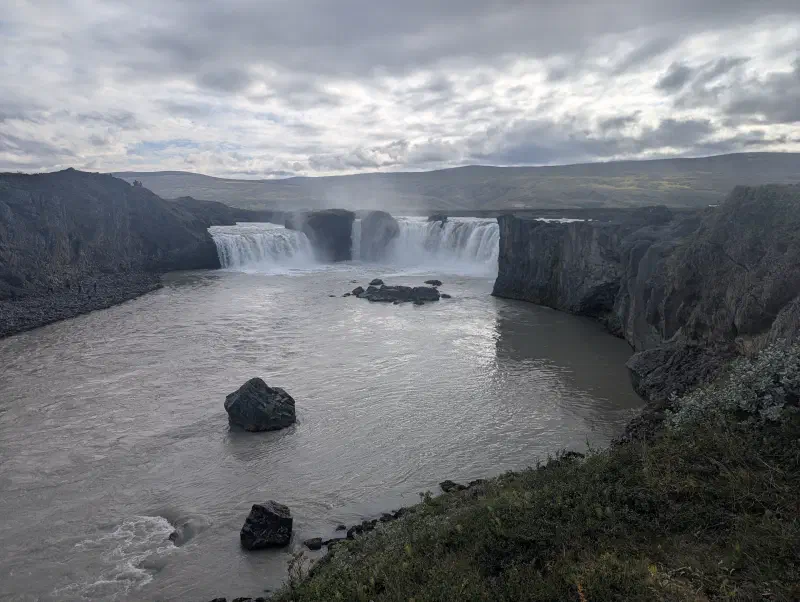
Next stop Goðafoss, the “waterfall of the gods”, very easy to reach from the road and visitable from both banks.
We ended the day in Hauganes, on Eyjafjörður, where hot tubs are set up directly on the beach. Bathing facing the sea at sunset: excellent idea. Night on site.
Day 7: The quiet North#
A more contemplative day, crossing the north from east to west.
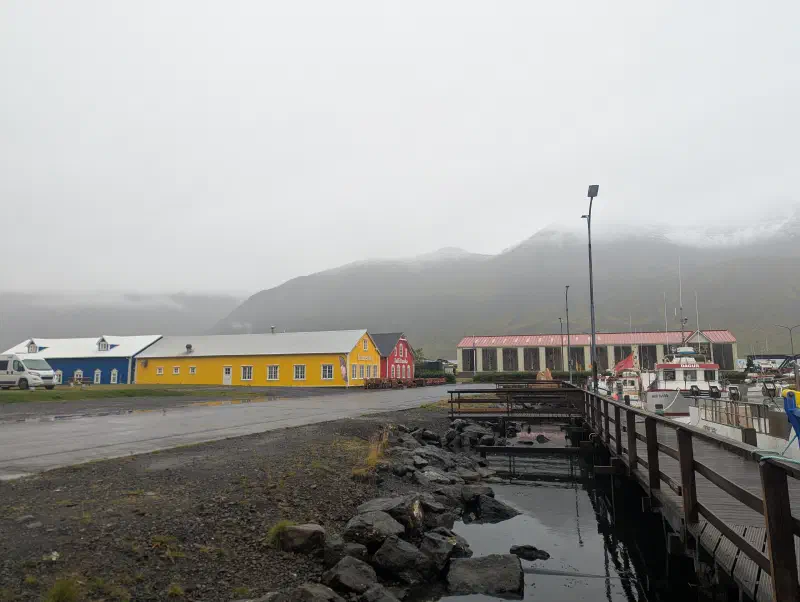
A walk around Siglufjörður, the former herring capital, tucked at the end of its fjord. The village has a lot of charm, with its colourful houses and its harbour.
We then walked out onto the Miklavatn spit, the sand bar separating the lake from the sea in Skagafjörður. Plenty of birds, nobody else.
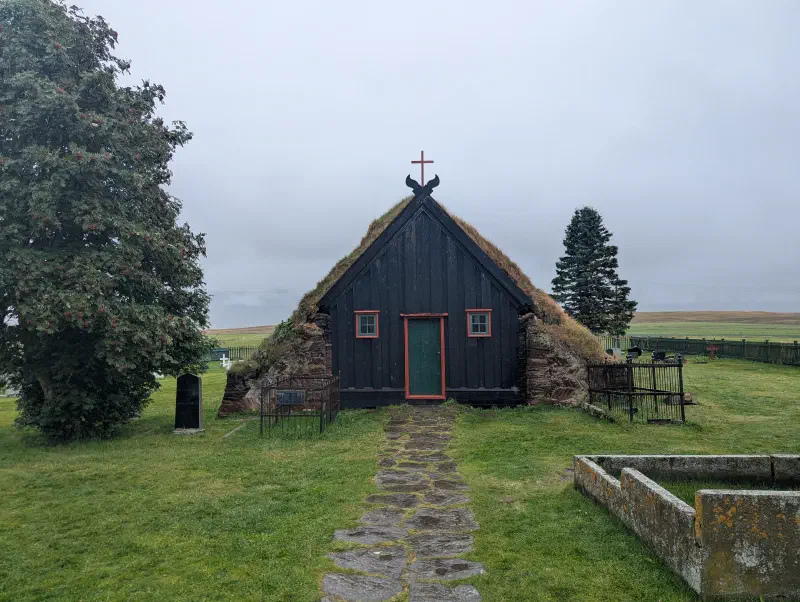
A stop at Víðimýrarkirkja, a small 19th-century turf church with earth walls and a grass roof. Simple and very beautiful.
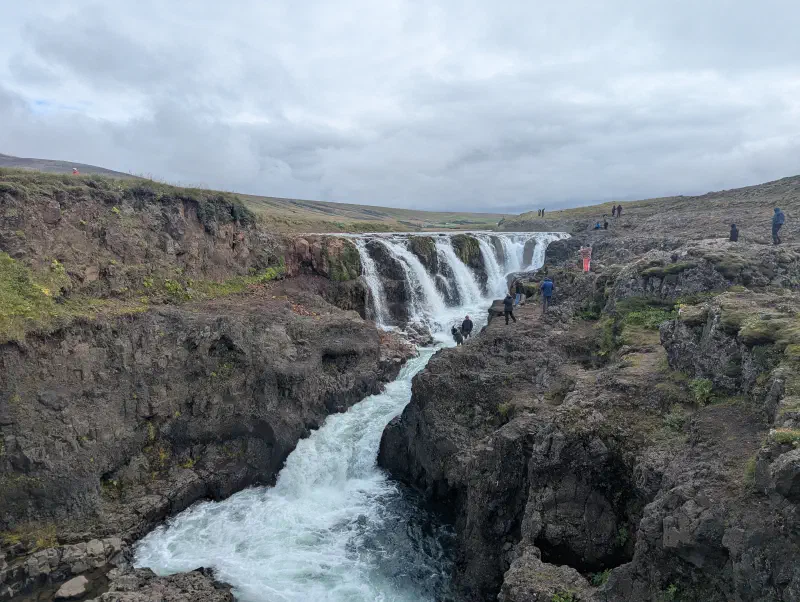
Last stop at the Kolugljúfur canyon, carved by the Víðidalsá, with its series of waterfalls and its troll-woman legend.
Night in Borðeyri, one of the smallest villages in the country, on Hrútafjörður.
Day 8: Strandir and a fox#
We entered the Westfjords along the Strandir coast, the most isolated part.
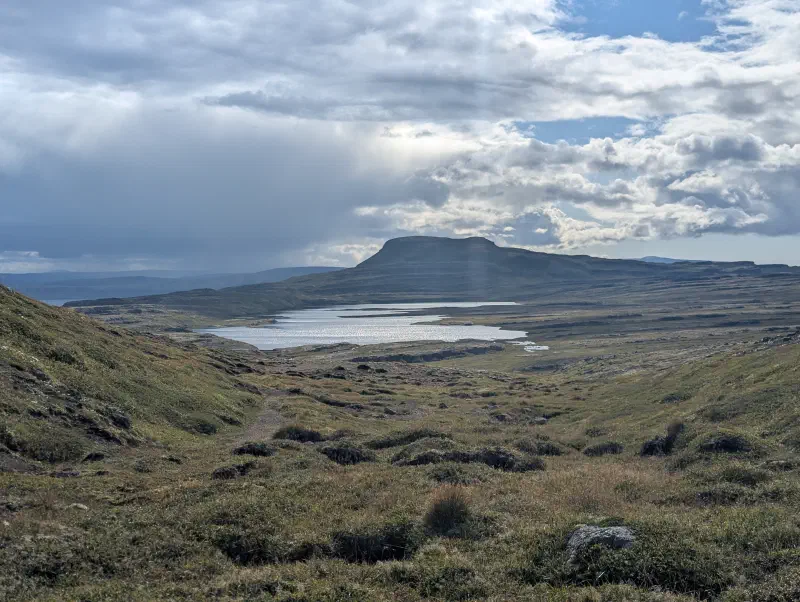
A hike from Kaldrananes up to lake Bæjarvötn, in the highlands above. We met nobody all day, in a very mineral setting, with the complete silence that goes with it.
Night at Heydalur, in Mjóifjörður. We missed magnificent northern lights that night, which will remain one of the regrets of the trip. On the other hand we spotted an arctic fox in the valley, which makes up for it a little.
Day 9: Seals and Dynjandi#
Driving along Ísafjarðardjúp, with a stop near Litlibær to watch the seals. They rest on the rocks right in front of the old turf farm, often in numbers. Just stay discreet and wait.
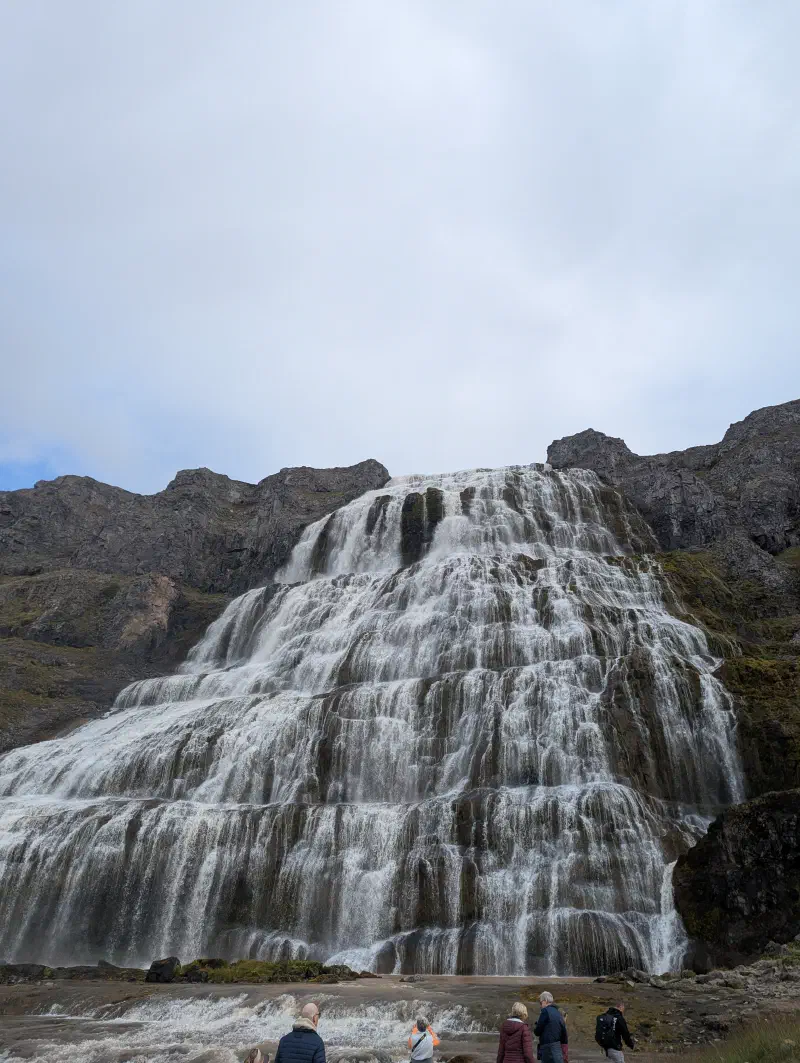
We then reached Dynjandi, in Arnarfjörður. This nearly 100-metre waterfall spreads out like a fan over the rock, and the path up to its foot passes several smaller falls before reaching the main one. It is the must-see of the Westfjords, and the reputation is deserved.
Night in Patreksfjörður.
Day 10: Látrabjarg and the far west#
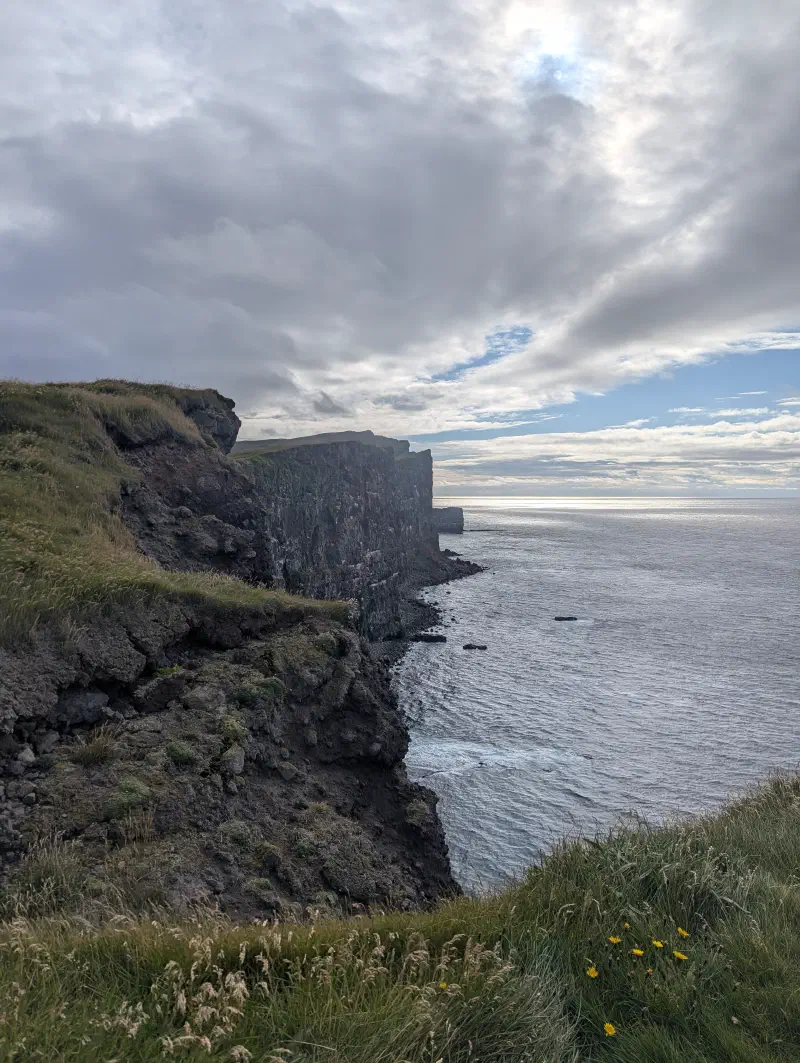
Off to the Látrabjarg cliffs, at the western tip of the country. These are bird cliffs stretching for kilometres and rising to more than 400 metres. You walk along the edge. Be careful though: there is no barrier at all and the edge is unstable, so do not get too close.
On the way back, a stop at the wreck of the Garðar BA 64, beached at Skápadalur. It is the oldest steel ship in Iceland, deliberately left there, and it makes for a fairly spectacular photo.
We also stopped at the waterfall known as “Nonni and Manni”, more modest but pretty.
Night at Hverinn.
Day 11: Reykjavík and back home#
A last day in Reykjavík wandering around town, including the climb up the Hallgrímskirkja tower. A lift takes you almost to the top, and from there you look down on the city’s colourful roofs, the bay and the mountains across the water. There is a fee, but it is still the best viewpoint over Reykjavík. Then it was back to the airport to return the camper and fly home to France.
Practical notes#
Getting to Landmannalaugar: without a 4x4, the highland bus from Hella works well. You need to book, and to plan on sleeping up there (hut or tent) to have time for two days of hiking. Two days felt like a good compromise: enough to do Suðurnámur / Brennisteinsalda on the first day, then Skalli on the second. That said, the bus tickets plus the night in the hut added up to a lot. With hindsight, renting a 4x4 camper might be the better call: it costs more up front, but it covers the trip to Landmannalaugar and makes every gravel road elsewhere in the country far more comfortable. The catch is the fords on the F-roads — you have to feel confident enough to cross water on your own.
The flies: this is what we underestimated. At Hverir and especially around lake Mývatn and Hverfjall, the swarms make the visit unpleasant. A head net costs next to nothing and completely changes the experience. Pack one before you leave.
The Westfjords: this is the part that struck us the most, and by far the quietest. Distances are deceptive: roads go around every single fjord, so allow much more time than the map suggests. In exchange, it feels like you have the country to yourself.
Unmarked trails: they do exist on the maps and are sometimes beautiful, like our way back from Skalli. But they require real navigation skills and decent weather. Skip them if either is missing.
Budget#
We spent around €2,100 per person, flights included: plane tickets, camper rental, fuel, campsites, food, the highland bus, the night in the hut, baths and activities.
That is more than on our first trip, where we were at around €1,100 per person excluding flights. The stay was longer and the van better equipped, but that is not the only explanation: we clearly felt a rise in campsite prices compared to 2023. Accommodation, which we treated as almost negligible the first time, now weighs properly on the budget of a camper road-trip.
On the payment side, no problem at all: everything was paid by card, campsites, the highland bus and the baths included. We did not need a single króna in cash over the whole trip.